In mythology, an oracle peers through mysteries to forecast destiny. In finance, the journey is far messier—no crystal balls, just data, models, and human insight. This guide shows how you can become your own disciplined, probabilistic oracle by blending tools, methods, and judgment, rather than chasing impossible certainties.
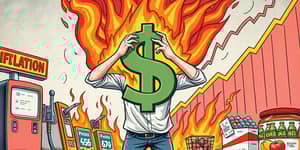
Global markets face persistent inflation and policy uncertainty alongside slowing growth and geopolitical shifts. BlackRock’s 2025 outlook warns of slower economic expansion and higher inflation, amplified by trade tensions and investment volatility.
At the same time, investors enjoy access to AI and alternative data once reserved for mega-institutions. From satellite imagery to sentiment indicators, data flows have exploded, offering deeper insights into corporate earnings, supply-chain dynamics, and consumer trends.
Despite these advances, structural uncertainty persists across markets. Black-swan events and model risk remind us that prediction is probabilistic. Success comes from disciplined frameworks, not wishful thinking.
Forecasting demands clear distinctions. A forecast is a best estimate built on explicit assumptions. A scenario maps “what if” pathways, such as a soft landing or tech boom. Speculation, by contrast, hinges on bets without a rigorous thesis.
Risk differs from uncertainty. Risk involves outcomes with known probabilities—like bond default rates—while uncertainty attaches to events with unknowable odds, such as a pandemic or sudden regulatory overhaul.
Time horizon also matters. Short-term moves (days to months) often follow sentiment and technicals, while medium-term cycles (1–3 years) reflect earnings and policy. Long-term trends (5–20 years) are driven by demographics, technology adoption, climate change, and geopolitical realignment.
Building a reliable forecasting framework starts with foundational quantitative tools and expert judgment. Traditional methods remain relevant, especially when data is scarce or relationships are stable.
Statistical and technical tools add rigor. Time-series analysis—ARIMA, exponential smoothing, and seasonal decomposition—captures patterns and cycles but often struggles with regime shifts and extreme events. Regression models quantify how rates, earnings, or inflation drive returns. Meanwhile, moving averages, RSI, Bollinger Bands, and MACD act as short-term trend thermometers for traders, smoothing volatility and flagging momentum changes.
In recent years, machine learning and deep learning models have elevated forecasting. Predictive analytics platforms train on massive datasets to spot nonlinear patterns. Sentiment analysis mines social media and news for behavioral signals. Correlation engines track cross-market linkages, revealing how shocks propagate between equities, commodities, and currencies.
To use these methods wisely, embrace probabilistic thinking and scenario planning. Maintain data quality, integrate cross-functional insights, update rolling forecasts, and test assumptions against alternative outcomes.
Long-term alpha hinges on themes that reshape economies. Look beyond quarterly reports to structural shifts such as demographics, technology, and climate change, which will underpin growth and risk alike.
For example, renewable energy investment has surged as costs of wind and solar fall, while AI deployments in manufacturing unlock productivity gains. Aging populations in developed countries drive demand for innovative healthcare solutions, even as emerging markets adopt digital finance at breakneck speed, reflecting shifts in global consumption patterns.
Becoming your own investment oracle requires a blend of humility and conviction: humility to acknowledge structural uncertainty in every forecast, and conviction to act when probabilities favor a clear theme. By integrating classical models, technical insights, and modern AI—grounded in disciplined risk management—you’ll be well positioned to navigate volatility and capture the trends that define the next decade.
References