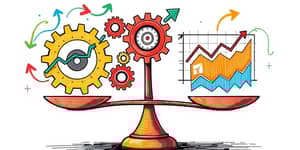
Predictive analytics harnesses the power of data to anticipate future market trends with unprecedented precision. By examining past and present datasets, businesses can uncover hidden patterns and act before competitors react. This approach is transforming industries, from retail to finance, by empowering decision-makers with actionable foresight and reducing reliance on intuition.
As markets become increasingly complex and volatile, companies that leverage these insights gain a critical edge. In this article, we explore foundational concepts, key techniques, real-world applications, and practical steps to implement predictive analytics in your organization.
At its core, predictive analytics analyzes historical and current data, applying advanced statistical models, machine learning algorithms, and AI to forecast outcomes such as sales revenue, customer churn, or inventory demand. It represents a shift away from traditional forecasting methods, which often depend on manual processes and gut instincts.
While conventional approaches struggle with volatility and large datasets, predictive systems shift decision-making from intuition to data-driven insights. They enable teams to respond proactively to market shifts, allocating resources more effectively and targeting opportunities with greater confidence.
Contrasted with legacy forecasting, which may rely on quarterly reviews and static spreadsheets, predictive analytics can process continuous data flows and adjust models on the fly. This dynamic capability reduces lag time and supports more granular segment analysis, enabling organizations to tailor strategies for specific customer cohorts and market segments.
Before selecting a model, teams must define success criteria, prepare datasets, and split data into training and validation groups. Rigorous testing and cross-validation ensure models generalize well and avoid overfitting. Hyperparameter tuning, feature engineering, and iterative retraining are essential steps in building robust predictive pipelines.
Advanced platforms can process vast datasets in real-time, achieving up to 90 percent forecast accuracy and handle ten times more data effortlessly. Model selection depends on goals: continuous forecasts, temporal patterns, segmentation, and classification tasks. Continuous monitoring and automated retraining are vital to maintain high performance as markets evolve.
Across industries, predictive analytics drives strategic initiatives and operational efficiencies. Typical applications include:
For example, a global retailer used time series analysis and clustering to predict regional demand, cutting stockouts by 25% during peak seasons. These insights also informed dynamic pricing strategies that increased profit margins by 5% during promotional events.
A variety of software solutions facilitate predictive analytics, each offering unique strengths for data professionals:
Many organizations build data lakes on cloud platforms to centralize information from multiple sources. These environments support real-time streaming, batch processing, and interactive exploration. Selecting a toolset that aligns with existing infrastructure and team expertise can accelerate adoption and ROI.
Companies that adopt predictive analytics report transformative results. Organizations can reduce errors by twenty to thirty percent, boost marketing ROI by twenty percent, and enjoy eighty percent faster analysis turnaround time. These improvements lead to more accurate budgeting, smarter resource allocation, and stronger competitive positioning.
Beyond immediate efficiency gains, predictive insights fuel long-term growth. By anticipating customer needs and optimizing supply chains, firms can lower inventory costs, improve service levels, and deliver tailored experiences that foster loyalty. The cumulative impact on profitability and resilience is profound.
Building a predictive analytics capability involves a structured approach:
Successful implementations also require cross-functional alignment, governance frameworks, and ongoing training programs to ensure stakeholders interpret and trust the insights generated.
Despite its power, predictive analytics comes with challenges. Ensuring data quality and consistency requires rigorous cleansing and governance. Models can drift over time, necessitating regular retraining and validation to preserve accuracy.
Addressing data privacy and ethical considerations is equally important. Organizations must implement robust policies to manage sensitive information and mitigate bias. Continuous auditing and transparent model explanations can build trust with both internal teams and external customers.
To maximize impact, start with simpler regression models before scaling to complex machine learning algorithms. Foster a culture of continuous learning, engaging finance, marketing, and IT teams to align on objectives and interpret results collaboratively. Ignoring these best practices risks biased predictions, wasted resources, and missed opportunities.
Looking ahead, the evolution from descriptive and diagnostic analytics to fully automated, real-time predictive systems will accelerate. Organizations that invest now in robust data foundations, modern AI tools, and skilled talent will navigate uncertainty with agility and confidence. Predictive analytics is more than a technical capability; it is a strategic advantage that enables businesses to transform raw data into actionable foresight, charting a clearer path through complexity and driving sustainable growth.
References