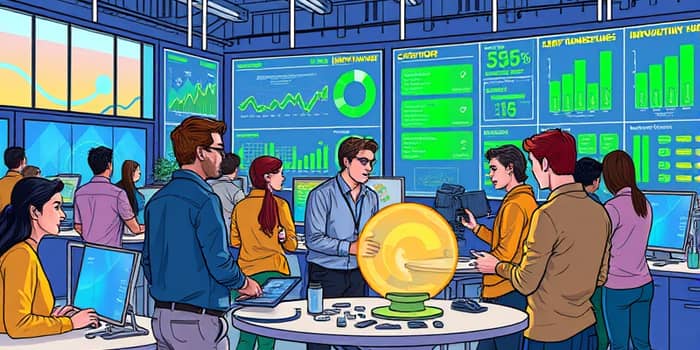
Innovation incubators have become the bedrock of the startup ecosystem, bridging the gap between visionary ideas and market-ready products. As the global market swells from USD 1,977 million in 2024 to an expected USD 3,121 million by 2032, the role of these hubs has never been more critical.
Anchored by government incentives and surging entrepreneurial activity, nearly 70% of new ventures now seek structured incubation. From specialized programs in clean energy and biotechnology to hybrid models that blend physical and virtual delivery, incubators are evolving to meet diverse founder needs.
The business incubator market is on a compelling growth curve. With a CAGR of 6.9% projected through 2032, and another forecast showing 7.7% growth to 2034, the industry benefits from:
These drivers underpin incubator resilience, even as competition intensifies among over 7,000 global programs.
The United States remains the largest incubator market, buoyed by deep investor networks and alumni success stories. Silicon Valley legends like Airbnb and Dropbox owe their early refinement to Y Combinator and other seed accelerators.
China is the fastest-growing region, with initiatives such as Tencent Public Space and Beijing Makerspace providing end-to-end support for founders. In Europe, public-private partnerships thrive in fintech hubs across Germany, France, and the UK, while Asia-Pacific sees rapid expansion in green tech and e-commerce incubators.
Emerging economies, notably India and Southeast Asian nations, forecast 18% annual growth through targeted incentives and digital infrastructure investments.
Global leaders continue to set benchmarks. Y Combinator, having backed over 7,800 startups, demonstrates the power of intensive mentorship. Techstars, with 6,300 portfolio companies, excels at connecting founders to corporate partnerships.
These programs share a common thread: rigorous selection, structured coaching, and access to an expansive investor network.
Corporate incubators are redefining intrapreneurship and startup partnerships. Below is a snapshot of flagship programs:
These programs offer corporate assets, pilot opportunities, and protected spaces for intrapreneurs to experiment and spin off new ventures.
Incubators are increasingly focused on disruptive domains. Over 164 AI-centric programs now guide founders in machine learning, natural language processing, and autonomous systems.
Clean energy and sustainability command 15% of incubation share, led by hubs such as Greentown Labs. Biotechnology, with a 19% foothold, sees high-impact accelerators like JLABS and IndieBio driving breakthroughs in therapeutics and diagnostics.
Hardware and IoT ventures find specialized support in programs like HAX, while blockchain-focused incubators emerge to structure secure, decentralized solutions.
Whether you’re a founder or an incubator operator, certain principles unlock growth:
Emphasizing founder wellbeing—through mental health support and peer networks—ensures teams remain resilient through the inevitable highs and lows of innovation.
As the incubator landscape matures, differentiation hinges on sector depth and investor access. Programs that integrate cutting-edge research, corporate partnerships, and robust alumni networks will shape the next wave of unicorns.
Incubators represent more than just accelerators of startups; they are launchpads for societal progress. By investing in tomorrow’s disruptive technologies today, we not only drive economic growth but also address global challenges in healthcare, energy, and beyond.
For entrepreneurs and ecosystem builders alike, the time is ripe to harness this momentum, collaborate boldly, and turn visionary ideas into world-changing realities.
References