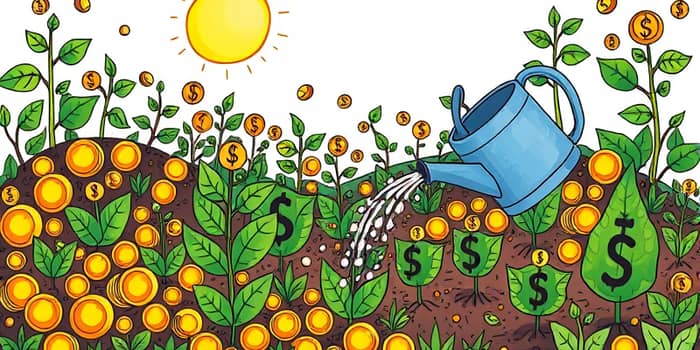
Imagine your financial life as a garden: with consistent care yields long-term growth, your assets will flourish. In today’s dynamic market, cultivating resilience is just as vital as planting seeds. Welcome to your guide on tending a robust financial ecosystem.
Before any seedling can sprout, the soil must be fertile. In financial terms, this means establishing an emergency fund that covers at least three to six months of expenses. Simultaneously, crafting a realistic budget helps you identify spending patterns and free up cash for future planting.
Debt reduction acts like soil amendment—removing toxins so new growth can thrive. Prioritize high-interest balances first, then channel those freed payments toward investments. By preparing your financial soil thoroughly, you set the stage for every subsequent step.
With foundations in place, it’s time to plant seeds. Start early by maximizing retirement contributions and harness compound growth. Diversify your portfolio like a well-tended bouquet: mix stocks, bonds, and alternative assets for balance.
Regularly plant additional contributions—consistency matters more than timing.
Over time, some investments grow faster than others, shifting your risk profile. Quarterly rebalancing acts as pruning—removing underperformers and restoring target allocations. This disciplined approach helps you manage risk drift and lock in gains without emotional bias.
Just as gardeners remove invasive growth, investors should examine each holding for continued alignment with objectives. If a position no longer fits, trim it back and redeploy capital into areas with stronger potential.
Interest rate cuts, inflation swings, and geopolitical storms can either nourish your garden or wither delicate shoots. Adjust your strategy by extending bond maturities to lock in attractive yields when rates fall, and introduce real assets to fertilize against inflation’s weeds.
Such diversification acts like multi-nutrient fertilizer—stronger, more resilient growth.
Today’s gardeners have high-tech irrigation systems; wealth builders have AI and digital dashboards. Leverage robo-advisors for basic allocations and AI-driven analytics to personalize strategies. These tools free advisors to focus on nuance, much like automated sprinklers ensure even watering.
Embedded wealth platforms provide real-time visibility, while cybersecurity measures protect sensitive soil from pests. Embrace advanced technology to enhance decision-making and maintain a secure environment.
As plants mature, they enter a harvestable phase. Retirement planning is your financial harvest. Model multiple scenarios, factoring in longer lifespans and potential healthcare costs. Max out HSAs and updated IRA contribution limits, and consider phased retirement for purposeful engagement.
Estate planning ensures your harvest feeds future generations. Update wills, trusts, and beneficiary designations so that your legacy reflects your values. Employ tax-smart withdrawal strategies to maximize after-tax income and preserve principal.
Pests in your financial garden come in the form of unexpected downturns, behavioral biases, and cybersecurity threats. Diversify geographically and by asset class to ward off concentration risk. Regular insurance reviews—life, health, property—provide defense against sudden shocks.
Behavioral discipline is your best pesticide. Avoid chasing hot markets or panic-selling. Instead, adhere to a defined investment playbook for downturns, focusing on small, consistent adjustments rather than large speculative bets.
Building wealth is a marathon, not a sprint. By treating your financial journey like gardening, you commit to ongoing care: nurturing roots, sowing seeds, pruning diligently, and adapting to weather changes.
Embrace the seasons of the market with resilience and patience. With disciplined cultivation and informed strategy, you’ll reap a bountiful harvest—today, tomorrow, and for generations to come.
References