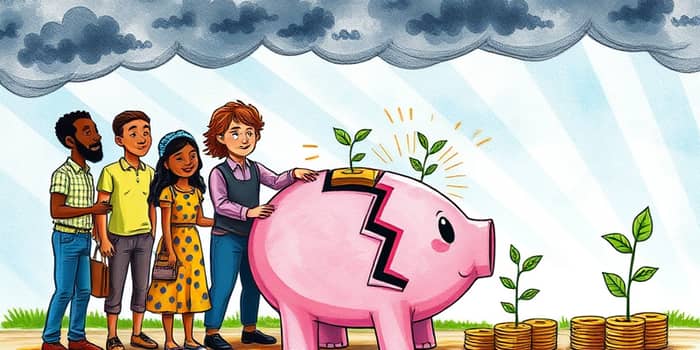
In an age of economic uncertainty and rapid change, ability to withstand financial shocks has never been more critical. From unexpected medical bills to sudden job loss or global crises, setbacks can derail even the most careful plans. Yet some individuals and households emerge stronger, armed with strategies and mindsets that transform adversity into opportunity.
This article explores the concept of financial resilience, examines its core pillars, highlights measurement frameworks, and offers actionable steps to help you bounce back with confidence. Whether you’re rebuilding after a setback or preparing for future challenges, these insights will equip you with tools to thrive.
At its core, financial resilience is the capacity to anticipate, withstand, and recover from shocks without long-term damage to well-being or goals. Shocks range from macroeconomic events like recessions and inflation to personal crises such as divorce or natural disasters. Unlike financial well-being, which covers overall satisfaction and goal progress, resilience focuses specifically on coping with and bouncing back from unexpected financial stressors.
Contrast this with financial fragility, a state where even minor disruptions—like a $500 car repair—can trigger a cascade of missed payments, high-interest debt, or depleted savings. Building resilience means reducing fragility through buffers, skills, and support systems.
Research and industry indices converge on four essential pillars that underpin resilience:
These pillars work in concert. For example, strong buffers reduce immediate stress, while literacy ensures disciplined use of resources, and social or institutional support provides safety nets when individual measures fall short.
Several household-level indices benchmark resilience across populations. The U.S. ACLI Financial Resilience Index tracks middle-class changes using resource and cost sub-indexes. Canada’s Seymour Financial Resilience Index employs nine behavioral and sentiment indicators to explain 66% of resilience variance. Globally, the World Bank’s Findex asks whether adults can raise an emergency sum equal to 5% of national GNI per capita within 30 days.
Understanding these measures reveals common gaps: many households lack sufficient buffer funds, struggle with credit access, or have low proactive financial behaviors. Recognizing where you stand helps tailor strategies to strengthen weak areas.
Building resilience is a gradual process. Start by automating savings—set up recurring transfers to a separate emergency account. Develop a realistic budget that accommodates unavoidable expenses while allocating discretionary funds for personal growth or leisure. Small, consistent behaviors compound over time into robust safety nets.
Beyond financial tactics lies the psychological dimension. Cultivating a growth mindset—viewing setbacks as learning experiences—fosters adaptive behaviors. Celebrate milestones, like fully funding a small emergency cushion, and reflect on lessons from past financial stresses.
Equally important is access to affordable credit and insurance. Maintaining a strong credit profile ensures borrowing options remain viable during tight times, while adequate coverage prevents shocks from derailing long-term plans. Regularly review credit reports and insurance policies, adjusting coverage as life circumstances evolve.
Finally, lean on your community. Support groups, online forums, and local organizations often share tips, resources, and emotional encouragement. Collective resilience grows when individuals exchange knowledge and aid, transforming personal setbacks into shared progress.
Financial setbacks are inevitable, but long-term damage is not. By cultivating the essential buffers for unforeseen financial emergencies and honing skills to manage income, debt, and risks, you build a foundation that weathers storms.
Begin today by assessing your current resilience: track savings, analyze spending habits, and inventory available support systems. Then deploy targeted actions—whether bolstering emergency funds or enhancing financial literacy—to close critical gaps. Over time, these efforts yield a powerful advantage: the confidence to navigate uncertainty and the freedom to pursue meaningful goals without fear.
Remember, resilience is both a capacity and a capability—fueled by resources and shaped by mindset. Embrace challenges as catalysts for growth, lean on your networks, and continuously refine your strategies. In doing so, you transform setbacks into stepping stones toward lasting financial well-being.
References