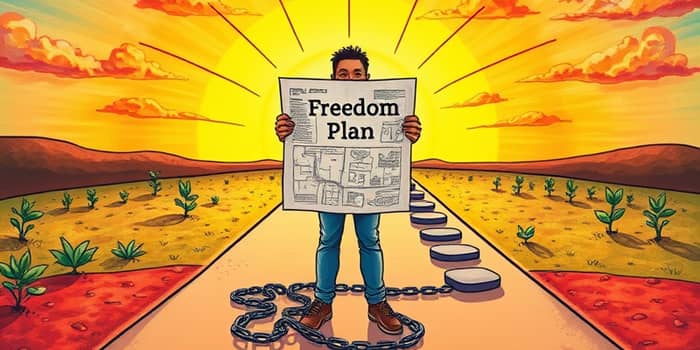
Embarking on a debt-free journey transforms lives by providing clarity, resilience, and true financial empowerment.
In today’s uncertain economy, Americans are redefining what it means to be successful. A remarkable 74% now say that being debt-free is a key pillar of their financial identity, outranking traditional milestones like homeownership or marriage.
Financial stress has surged, with 68% of adults reporting anxiety about money in 2025, up from 50% just a year earlier. Yet, 35% feel in control or proud of how they manage their finances, proving that intentional planning can conquer worry.
Reducing debt leads the pack of financial goals for 42% of Americans in 2025, while 97% have at least one monetary objective. Despite these ambitions, only 23% of adults truly live debt-free, making this aspiration both urgent and rare.
For decades, success was measured by luxury and status symbols. Today, the narrative shifts to freedom, resilience, and low or no debt. Debt-free living offers emotional peace and tangible options: career changes, relocation, or early retirement.
This redefinition reframes budgeting not as deprivation but as a roadmap to reclaim autonomy and life choices. When every dollar aligns with your values, money becomes a tool for empowerment rather than a source of stress.
Nearly 77% of Americans carry some form of debt: credit cards, student loans, auto loans, or mortgages. A startling 33% hold more credit card debt than emergency savings, while only 53% have a financial cushion exceeding their card balances. Thirteen percent have neither debt nor savings—a fragile position.
These figures highlight the prevalence of obligations and the scarcity of true financial freedom. Understanding your standing among these statistics is the first step toward change.
Distinguishing between productive debt that builds equity and high-interest consumer debt that drains resources is essential. Mortgages and certain student loans can be strategic, while credit card balances and personal loans often carry rates above 20%.
Targeting high-interest obligations yields the quickest relief, freeing up funds and reducing long-term costs. This focus sharpens your efforts and maximizes the impact of every extra payment.
Debt carries emotional weight: shame, isolation, and stress. Conversely, crafting a clear plan and social support instills confidence and accountability. Studies show that individuals who share goals with friends or advisors sustain progress and feel less anxious, even early in their payoff journey.
Celebrating small victories—like paying off a single credit card—releases dopamine, reinforcing positive behavior. Momentum builds quickly, transforming doubt into determination.
Achieving debt-free dreams requires a structured approach. This blueprint outlines seven critical components that collectively create a powerful path:
Begin by listing every debt: creditor, balance, interest rate, minimum payment, and due date. Categorize obligations into high-interest consumer debt versus lower-interest, asset-backed loans like mortgages.
Calculate your total debt and weighted average interest rate. Compare monthly payments to net income to understand your debt burden. As Patricia discovered, a complete breakdown of her budget revealed opportunities to negotiate lower rates and streamline payments.
Adopt zero-based budgeting: assign every dollar a purpose before the month begins. Divide expenses into needs, wants, and financial priorities. Allocate funds first to minimum debt payments and a starter emergency fund, then to necessary living costs, and finally to discretionary spending.
Use budgeting apps to track expenses and uncover savings—Patricia used an app to find the cheapest gas stations, shaving critical dollars off her monthly outlay. Framing the budget as a plan to buy back your freedom makes discipline feel rewarding rather than restrictive.
Select a strategy that aligns with your personality and goals. Quick wins can motivate, while mathematically optimal approaches save more money over time. For those overwhelmed by multiple creditors, professional plans offer structure and support.
Boost earnings through side gigs, freelance work, or selling unused items. Even modest extra income accelerates payoff. Establish accountability partners or join online communities to celebrate milestones and share challenges.
Once debts are eliminated, guard against relapse. Maintain a robust emergency fund, keep credit card usage minimal, and revisit your budget quarterly. Building habits like monthly financial check-ins ensures long-term stability.
Consider Maria, who paid off $15,000 in credit card debt in 18 months by combining a part-time tutoring job with a strict snowball plan. Her first payoff sparked enthusiasm that carried her to the finish line.
Or James, a medical worker with $50,000 in student loans. He used the avalanche method and renegotiated rates through a nonprofit, cutting his timeline by five years and saving tens of thousands in interest.
Debt-free living is more than a financial target—it’s a gateway to choice, security, and peace of mind. With a clear assessment, a values-based budget, the right payoff strategy, and ongoing support, you can transform stress into empowerment.
Your blueprint awaits. Start now, take control, and step confidently toward a future defined by freedom rather than obligations.
References