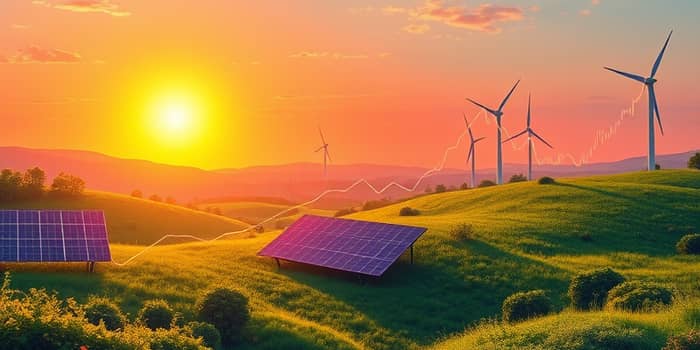
As global energy demand soars and sustainability becomes non-negotiable, renewables have emerged not just as an environmental imperative but as a compelling investment frontier. In 2026, clean energy has transcended its early-stage roots, delivering robust returns and stability.
Renewable sources now generate more electricity than coal, with global output hitting 11,900 TWh in 2025. This milestone marks renewables as the surpassing coal as largest generation source worldwide. From record solar PV additions of 390 GW in China to offshore wind gains of 140 GW, the clean energy revolution has entered a mature phase.
In 2025, global clean energy investment topped $2.2 trillion, more than double spending on oil and gas. Solar PV commanded $450 billion, while storage investment surged to $66 billion. With costs down by up to two-thirds, battery systems now offer stable cash flows via long-term PPAs and grid stability solutions.
Over the past decade, European solar projects delivered an average annual return of 15.7%, outpacing traditional energy assets. Utility-scale wind and storage now rival real estate in yield, backed by inflation-linked offtake agreements and corporate PPAs. Data center operators, hyperscalers, and industrial firms are signing up for multi-decade contracts, driving record-breaking capital inflows from institutions.
Investors can access these returns through green infrastructure funds, yieldcos, or direct project stakes. Key considerations include revenue visibility, counterparty strength, and technology maturity. Hybrid structures combining solar, wind, and storage are rising to offer dispatchable, 24/7 power profiles.
Technological innovation continues to optimize generation and integration. Solar module efficiencies are nearing 25%, and advanced turbine designs boost capacity factors. Pumped-storage hydro doubles to 16.5 GW, while AI-driven grid management ensures seamless balancing.
These leaders exemplify disciplined capital allocation and operational excellence. Investors should prioritize firms with strong balance sheets, diversified asset bases, and long-term offtake contracts.
Asia dominates clean energy deployment and investment. China met its 2030 solar and wind targets six years ahead of schedule, investing over $625 billion in 2024 alone. India’s ambitious renewable goals are catalyzing private capital into solar parks, pumped hydro, and distributed mini-grids.
Nuclear power is also experiencing a modest renaissance, adding 14 GW in 2025, primarily in China, to complement variable renewables and provide baseload stability.
The clean energy sector faces headwinds from supply-chain bottlenecks, tariff policies, permitting delays, and commodity price swings. A potential policy shift in China could slow capacity growth from 703 GW in 2025 to 650 GW in 2026. However, diversified portfolios and digital asset management can mitigate exposure.
Key trends to monitor include:
By adopting resilient supply-chain practices and prioritizing projects with secure off-take, investors can navigate volatility and capitalize on long-term growth.
Building a future-proof portfolio requires a balanced mix of proven technologies, geographic diversification, and revenue certainty. Investors should:
Through disciplined selection and active management, clean energy assets can deliver unprecedented demand from data centers and electrification needs while fostering a sustainable planet.
As investors seek both performance and purpose, renewables stand out as an institutional-grade asset class with the potential to power economic growth and climate resilience. By embracing this transformation, you not only secure competitive returns but also contribute to a cleaner, more equitable energy future.
References