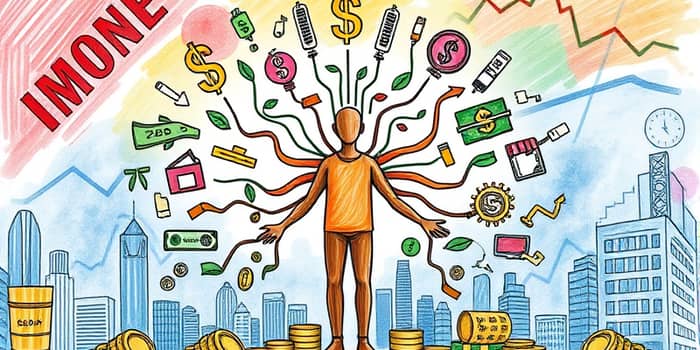
In an era of shifting labor markets, cooling inflation, and a booming creator economy, relying on a single paycheck feels increasingly precarious. As 2026 unfolds, professionals and creators alike must reconsider how they build wealth, protect against volatility, and create sustainable growth.
Economic trends show US job losses of over 200,000 in non-healthcare sectors during late 2025, even as real GDP grew by more than 4%. This paradox underscores a critical lesson: productivity gains no longer translate directly into jobs. Instead, workers and creators must pursue multiple streams of income to lock in gains and hedge against downturns.
The US creator economy doubled from $20.64 billion in 2025 to $40 billion in 2026, with global projections approaching $480 billion by 2027. Yet only 4% of creators earn more than $100,000 annually. What separates these top earners? They average 5 distinct income sources versus 2 for lower earners, driving 78% revenue growth in 2026.
The professionalization of content creation is moving profits from fleeting virality to repeatable, scalable business models. Creators building separate ventures beyond ad revenue average about $100,000 annually, compared to $45,000 for those without.
As fixed-income yields hover near 6%—well above the 2.5% inflation rate—savvy individuals can generate stable returns alongside active ventures. Rental properties, print-on-demand shops, and micro-investment platforms offer scalable, low-maintenance revenue. Salon suite franchises and short-term rentals also provide predictable cash flows, acting as safety nets against labor market shocks.
While diversification reduces vulnerability, managing multiple ventures demands intentional planning. Start by assessing core skills, interests, and market gaps. Pair high-effort, high-reward streams (like courses) with lower-touch income (like dividends or UGC licensing) to smooth cash flow.
Regular performance reviews ensure you can pivot resources toward the highest-growth areas. Collaborating with seasoned business partners or fellow creators amplifies reach and expertise, while data-driven measurement addresses the 57% of marketers struggling with influencer ROI.
Why is now the right moment to act? Inflation has cooled, but hiring remains sluggish. Productivity continues to power GDP growth without expanding workforces. This disconnect creates both urgency and opportunity: those who build diverse revenue portfolios can seize upside, while safely weathering downturns.
For creators, prioritize integrated deals—combining sponsorships, affiliate commissions, and UGC licensing. Brands benefit by partnering with creators offering multi-faceted monetization approaches, improving ROI and reducing campaign risk.
For the broader audience, reorient savings toward high-quality fixed income, real assets, and equity stakes in creator-led ventures. Treat each stream as a portfolio component, rebalancing periodically to sustain momentum.
“Creators are building revenue portfolios that would make any CFO nod in approval,” speaks to a broader truth: income diversification isn’t just a buzzword—it’s a competitive imperative.
Whether you’re a full-time professional, gig worker, or rising creator, moving beyond the 9-to-5 means embracing financial resilience amid uncertainty. By combining active streams—courses, partnerships, businesses—with passive foundations like dividends and rentals, you build durable wealth anchored in multiple sources.
In 2026’s dynamic economy, variety isn’t just the spice of life; it’s the bedrock of prosperity. Start mapping out your streams today, and craft a future where income—and opportunity—knows no single horizon.
References