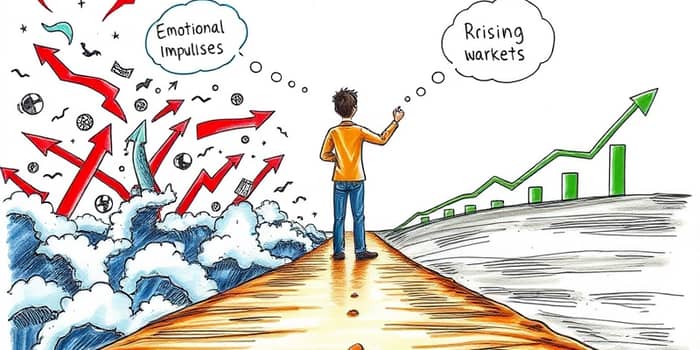
Behavioral finance bridges psychology and economics, revealing why investors stray from rational models. In times of stress or euphoria, suboptimal outcomes like market bubbles and panic selling emerge, eroding wealth and confidence.
Research shows that our minds deploy shortcuts and emotional reactions, often at odds with long-term returns. These tendencies can lead to excessive trading and high-risk bets, erode discipline, and inflate costs by up to 1–2% annually.
Although every investor faces unique challenges, certain biases recur across markets and time:
At the heart of behavioral finance lies Prospect Theory, developed by Kahneman and Tversky. It explains how losses feel twice as painful compared to gains, causing inconsistent risk attitudes.
Traditional Efficient Market Hypotheses assume rational actors, but widespread biases introduce anomalies: bubbles, underreactions, and overreactions. Investors often cling to outdated reference points and ignore fresh signals, undermining portfolio agility.
In fast-moving markets, we rely on mental shortcuts and biases to make quick decisions. These heuristics—though time-saving—can conflict with a data-driven approach and warp judgment.
Examining historical episodes crystallizes the cost of unchecked psychology:
1. 2008 Financial Crisis: Fueled by overconfidence and herd behavior, many investors failed to rebalance portfolios after years of rising markets. Those with over $200,000 in retirement accounts saw losses exceeding 25%, as panic selling set in.
2. Early 2000s Real Estate Bubble: Widespread fear of missing out drove buyers to pay far above fundamentals. Banks extended credit freely, and a herd mentality inflated prices until the market collapsed.
3. 2000 Tech Stock Crash: Overoptimism led to skyrocketing valuations. When earnings fell short, misplaced optimism and overreaction triggered a rapid sell-off, creating opportunities for contrarian investors.
Awareness alone isn’t enough. Professionals recommend practical steps to align behavior with long-term goals:
Behavioral finance shines a light on the invisible forces shaping investor choices. By understanding common biases, you can build safeguards and transform instincts into strategic advantages.
Embrace a blend of mindfulness, rule-based systems, and professional guidance to navigate the emotional tides of markets. With these tools, you’ll move toward more rational, resilient, and ultimately successful investing.
References